Category Archives: Biobank

Wet zeggenschap lichaamsmateriaal: Nota naar aanleiding van het verslag en Nota van wijziging gepubliceerd

Op 23 september 2022 is de Nota naar aanleiding van het verslag inzake Regels voor handelingen met lichaamsmateriaal, welke worden verricht voor andere doeleinden dan geneeskundige behandeling of diagnostiek van de donor (Wet zeggenschap lichaamsmateriaal) gepubliceerd.

In de nota gaat de Minister van Volksgezondheid, Welzijn en Sport (VWS), mede namens de Minister van Binnenlandse Zaken en Koninkrijksrelaties (BZK), in op de vragen uit het verslag van de vaste commissie voor VWS van 15 oktober 2021 over de Wet zeggenschap lichaamsmateriaal (Wzl).

De Nota naar aanleiding van het verslag inzake Regels voor handelingen met lichaamsmateriaal, welke worden verricht voor andere doeleinden dan geneeskundige behandeling of diagnostiek van de donor (Wet zeggenschap lichaamsmateriaal) telt 102 pagina’s en is te downloaden via de link hieronder:

De minister van VWS heeft daarnaast ook een nota van wijziging ingediend.

De Nota van wijziging inzake Regels voor handelingen met lichaamsmateriaal, welke worden verricht voor andere doeleinden dan geneeskundige behandeling of diagnostiek van de donor (Wet zeggenschap lichaamsmateriaal) is te downloaden via de link hieronder:
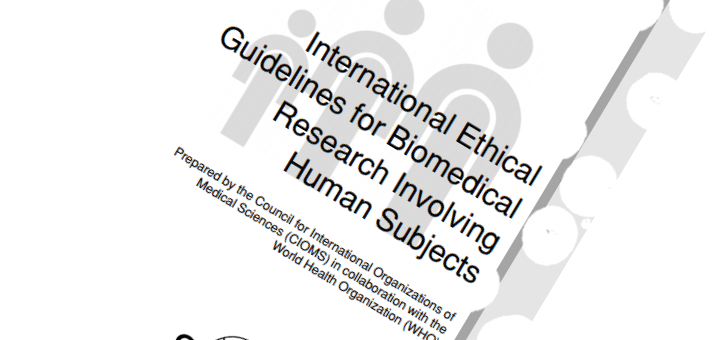
Ethical review, according to the ‘International Ethical Guidelines for Biomedical Research Involving Human Subjects ‘

Ethical review, according to the ‘International Ethical Guidelines for Biomedical  Research Involving Human  Subjects ‘ (CIOMS, 2002):

Ethical review. The ethical review committee is responsible for safeguarding the rights, safety, and well-being of the research subjects. Scientific review and ethical review cannot be separated: scientifically unsound research involving humans as subjects is ipso facto unethical in that it may expose them to risk or inconvenience to no purpose; even if there is no risk of injury, wasting of subjects’ and researchers’ time in unproductive activities represents loss of a valuable resource. Normally, therefore, an ethical review committee considers both the scientific and the ethical aspects of proposed research. It must either carry out or arrange for a proper scientific review or verify that a competent expert body has determined that the research is scientifically sound. Also, it considers provisions for monitoring of data and safety.

If the ethical review committee finds a research proposal scientifically sound, or verifies that a competent expert body has found it so, it should then consider whether any known or possible risks to the subjects are justified by the expected benefits, direct or indirect, and whether the proposed research methods will minimize harm and maximize benefit. (See Guideline 8: Benefits and risks of study participation.) If the proposal is sound and the balance of risks to anticipated benefits is reasonable, the committee should then determine whether the procedures proposed for obtaining informed consent are satisfactory and those proposed for the selection of subjects are equitable. (p. 25)

CIOMS. International Ethical Guidelines for Biomedical Research Involving Human Subjects. Geneva: Council for International Organizations of Medical Sciences (CIOMS), 2002. Retrieved August 9, 2014, from http://www.cioms.ch/publications/layout_guide2002.pdf.

Onverwachte bevindingen

Check out our new educational tool. IRB Primer: Incidental and Secondary Findings http://t.co/ptqQIe9ieF More to come.

— Bioethics Commission (@bioethicsgov) April 16, 2014

Just posted: Primers for Practitioners on Incidental & Secondary Findings. First up – the Clinician Primer: http://t.co/PTj4fQUV3a

— Bioethics Commission (@bioethicsgov) May 5, 2014

The Direct-to-Consumer Provider Primer is 3rd of 3 new Primers for Practitioners on Incidental & Secondary Findings. http://t.co/NEsmWfCU4K

— Bioethics Commission (@bioethicsgov) May 7, 2014

New blog post: “Video Highlights the Need for a Plan When it Comes to Incidental Findings” http://t.co/2JIKrSzgJV

— Bioethics Commission (@bioethicsgov) April 15, 2014

Just posted for use in various educational settings: Informed Consent in Ethical Management of Incidental Findings http://t.co/tZendKHXWT

— Bioethics Commission (@bioethicsgov) March 19, 2014

New Blog Post: “New Educational Module Available on Informed Consent for Anticipate and Communicate” http://t.co/ggmAuSI8Tw

— Bioethics Commission (@bioethicsgov) March 20, 2014

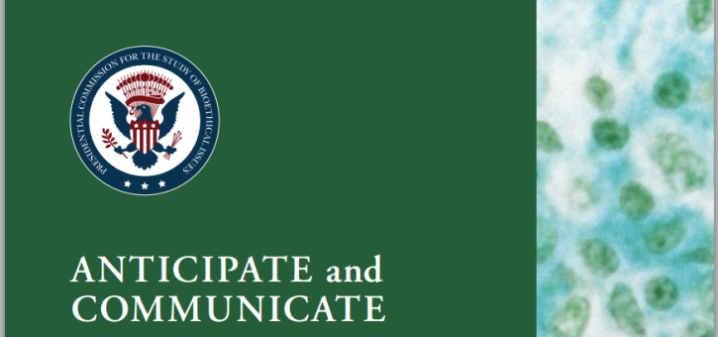
Download Bioethics Commission’s report: Anticipate and Communicate. Ethical Management of Incidental & Secondary Findings in the Clinical, Research,& Direct-to-Consumer Contexts. December 2013 (.pdf)

Een Amerikaans voorbeeld: Biobanken, nader gebruik lichaamsmateriaal en regelgeving

Omdat Biobank onderzoek niet (of deels) onder de defnitie van de Wet medisch-wetenschappelijk onderzoek met mensen (WMO) valt, bestaan er nog veel (juridische) onduidelijkheden rond het opzetten en uitvoeren van Biobank onderzoek in Nederland. Dat deze onduidelijkheden niet alleen in Nederland en Europa bestaan, blijkt wel uit een instructiefilm van het Office for Human Research Protections (OHRP) die op 5 juli 2010 online werd gezet. In de film legt Julie Kaneshiro uit wanneer een Biobank onderzoek onder de (Amerikaanse) wetgeving voor medisch-wetenschappelijk onderzoek valt, onder welke voorwaarden onderzoekers gebruik kunnen maken van lichaamsmateriaal voor wetenschappelijk onderzoek en welke uitzonderingsmogelijkheden er zoal bestaan.

Het is interessant om te zien hoe de Amerikaanse collega’s de juridische problemen rond Biobanken hebben aangepakt. Het wachten is nu op een soortgelijk filmpje dat uitleg geeft over de Nederlandse situatie.

Bekijk OHRP ‘Research Use of Human Biological Specimens and Other Private Information’ https://www.youtube-nocookie.com/embed/yp5GzAmXlPM